For decades, severe thalassemia meant one unchanging routine: blood transfusions every few weeks, daily iron chelation, and a calendar shaped around hospital visits. These treatments kept patients alive, but they never touched the real problem—a genetic error in how the body makes hemoglobin. That has changed. Gene therapy for thalassemia now targets the root cause directly, and the results are reshaping what patients can expect from life.
This guide walks through how gene therapy for thalassemia works, the science behind CRISPR and stem cell editing, the milestones that brought us here, and what the treatment journey actually looks like. You will also find an honest look at the benefits, risks, costs, and the future of stem cell gene therapy for blood disorders.
Whether you are a patient, a caregiver, or simply trying to understand this breakthrough, the goal here is clarity—real information, no false promises.
What Is Thalassemia and Why Does Gene Therapy Matter?
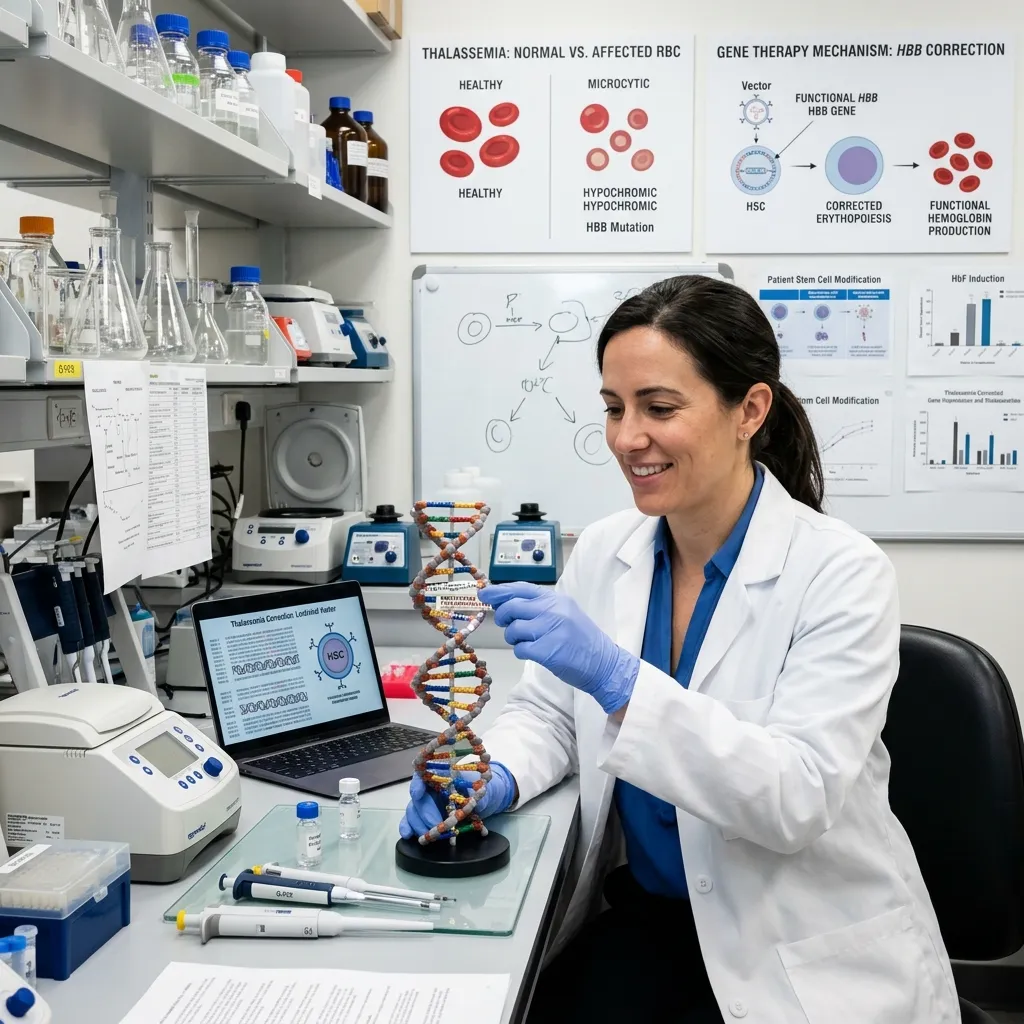 Thalassemia is an inherited blood disorder caused by mutations in the genes that control hemoglobin production. Hemoglobin is the protein in red blood cells that carries oxygen throughout the body. When these genes malfunction, the body cannot make enough healthy hemoglobin, leading to chronic anemia. Beta thalassemia major is the most severe form, requiring constant medical care to survive.
How is thalassemia treated today?
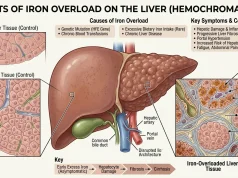
The standard treatment for severe thalassemia involves blood transfusions every two to four weeks. Each transfusion restores oxygen-carrying capacity, but it also floods the body with iron. To prevent fatal organ damage, patients must take iron chelation therapy to remove that excess iron.
Bone marrow transplants can cure thalassemia, but they require a perfectly matched donor. Many patients never find one. For those people, lifelong transfusions remain the only option—a relentless cycle that takes both a physical and emotional toll. You can read more about that emotional burden in our guide on the psychological impact of thalassemia.
Why is gene therapy for thalassemia such a breakthrough?
Gene therapy for thalassemia fixes the genetic error inside the patient’s own body. Because it uses the patient’s own cells, it removes the need for a matched donor. By delivering a permanent genetic correction, this approach can free patients from regular transfusions and the constant burden of iron management.
How Does Gene Therapy Work?
Genes work like instruction manuals. They tell cells how to build proteins. In thalassemia, the instructions for building the beta-globin chain of hemoglobin are faulty, so the bone marrow produces defective red blood cells that die too early.
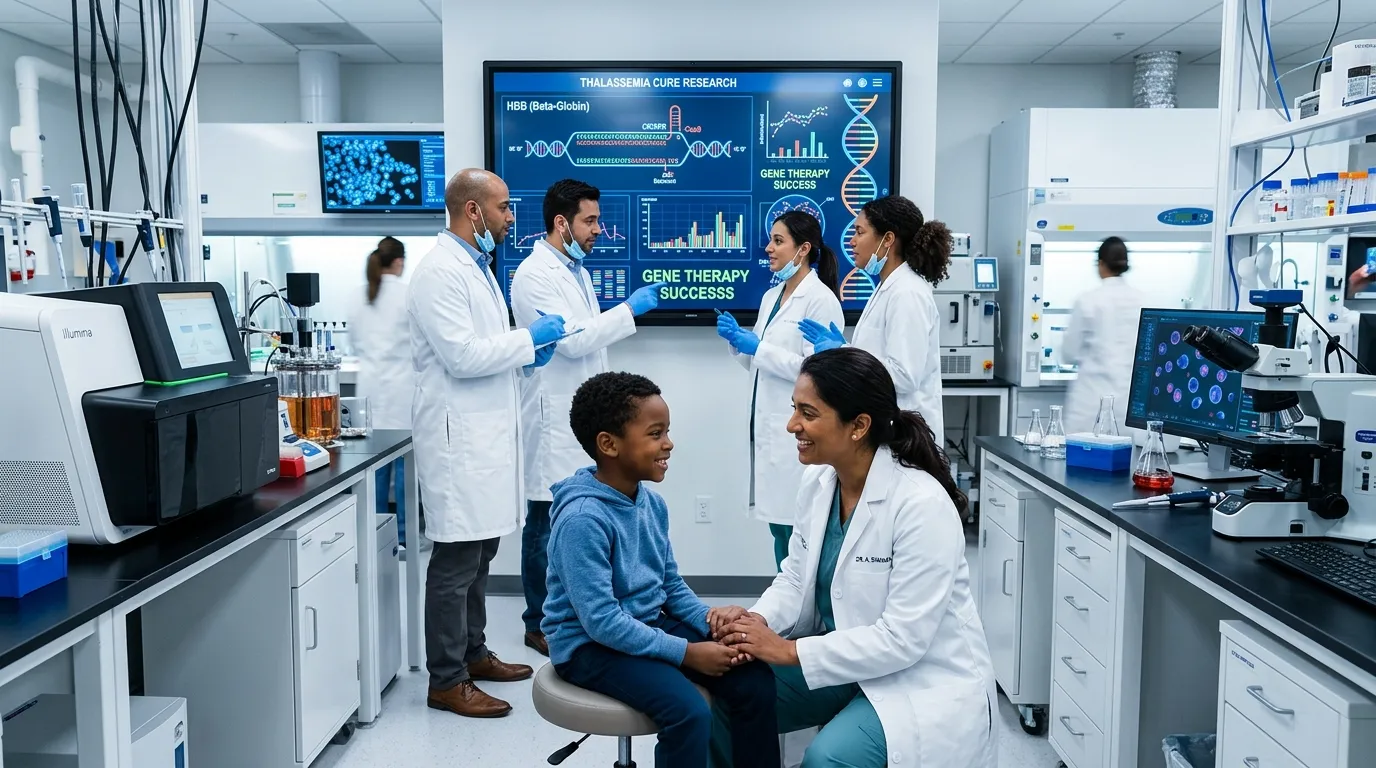
Gene therapy for thalassemia rewrites those instructions. Doctors collect hematopoietic stem cells from the patient. In a specialized laboratory, scientists modify those cells so they can produce healthy hemoglobin. The corrected cells are then reinfused, where they travel to the bone marrow and begin making healthy red blood cells.
What are the two main approaches to gene therapy for thalassemia?
Scientists use two primary methods to repair the genetic code:
- Viral vectors: A harmless virus acts as a delivery vehicle, inserting a working copy of the beta-globin gene into the stem cell’s DNA. This is known as gene addition therapy.
- Non-viral methods (CRISPR): Instead of adding a new gene, CRISPR-Cas9 edits the existing genetic code. It works like molecular scissors, modifying precise DNA sequences without using a viral carrier.
Both methods aim for the same goal: restoring healthy red blood cell function and reducing or eliminating the need for transfusions.
How Has Gene Therapy for Thalassemia Evolved Over Time?
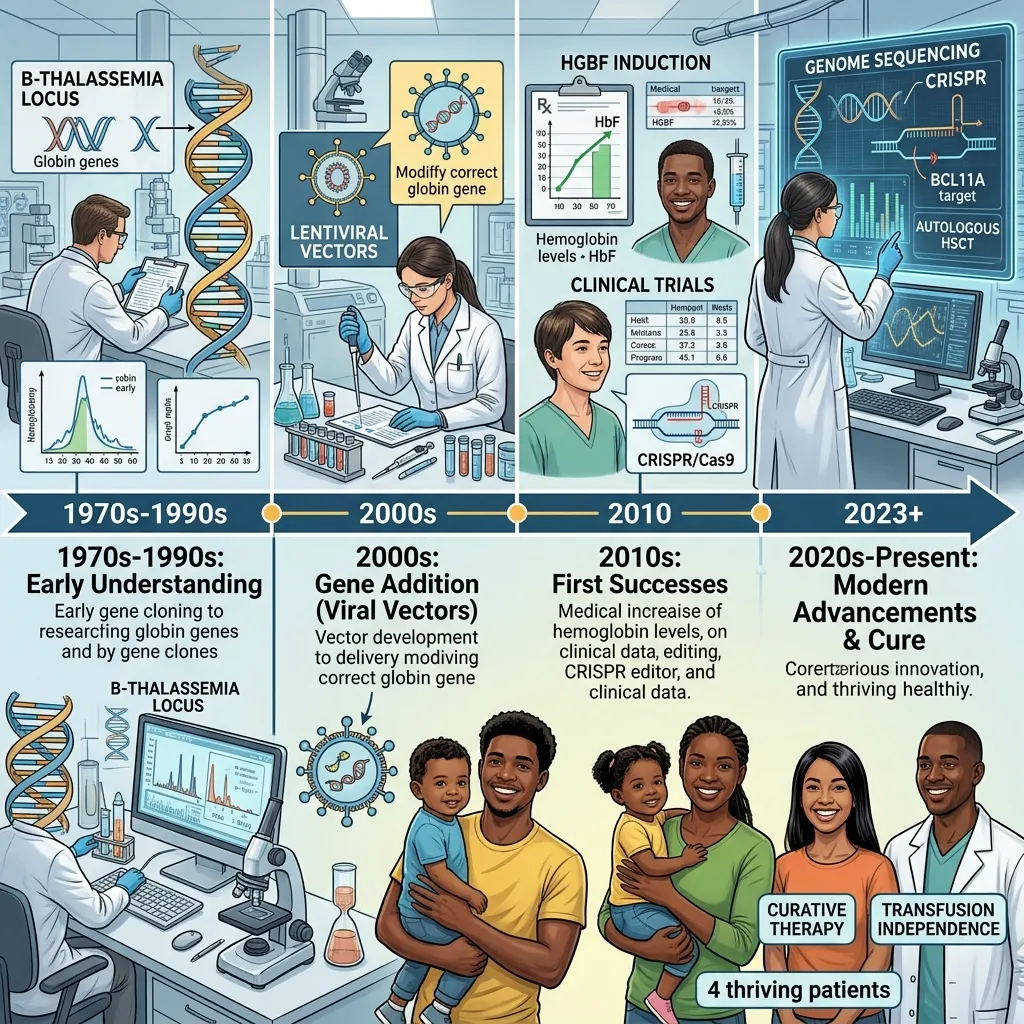 The road to today’s treatments was long. Early gene therapy attempts in the 1990s and 2000s struggled with low efficiency and serious safety concerns. Some early viral vectors accidentally activated nearby genes, raising the risk of blood cancers. These setbacks slowed progress but taught researchers critical lessons about safety.
The development of safer lentiviral vectors and the arrival of CRISPR-Cas9 changed everything. Two milestones stand out:
- Zynteglo (betibeglogene autotemcel): Approved by the FDA in August 2022, this lentiviral gene addition therapy inserts a functional beta-globin gene into a patient’s stem cells.
- Casgevy (exagamglogene autotemcel): Approved by the FDA in December 2023, Casgevy became the first CRISPR-based therapy approved for any disease.
These approvals turned gene therapy for thalassemia from a research concept into a clinical reality.
How Does CRISPR Gene Therapy for Thalassemia Treatment Work?
CRISPR gene therapy for thalassemia treatment represents one of the most precise tools in modern medicine. CRISPR-Cas9 can cut DNA at an exact location, allowing scientists to disable or correct a specific gene.
The science behind CRISPR-Cas9
Rather than repairing the faulty adult hemoglobin gene, Casgevy edits a gene called BCL11A. This gene normally switches off fetal hemoglobin production shortly after birth. By disabling BCL11A, the therapy reactivates fetal hemoglobin—and fetal hemoglobin compensates beautifully for the defective adult version.
Why does CRISPR matter for beta thalassemia gene editing cure research?
In beta thalassemia gene editing cure research, CRISPR offers a major advantage: extreme precision without relying on viral vectors. The CLIMB THAL-111 trial reported that 39 out of 42 evaluable patients receiving Casgevy remained transfusion-free for at least 12 consecutive months.
The main challenge is monitoring for “off-target” edits, where the molecular scissors cut the wrong DNA sequence. Next-generation tools like base editing and prime editing aim to reduce that risk even further by changing single DNA letters without cutting both strands.
What Role Do Stem Cells Play in Gene Therapy for Blood Disorders?
Stem cell gene therapy for blood disorders combines the regenerative power of stem cells with advanced genetic modification. Hematopoietic stem cells are the body’s blood-forming factories, capable of producing every type of blood cell.
Why are the patient’s own stem cells used?
By isolating the patient’s own blood-forming stem cells, scientists avoid the risk of rejection that comes with donor transplants. This is the foundation of all modern stem cell treatment for thalassemia. The corrected cells engraft in the bone marrow and continue replicating, producing healthy hemoglobin for the long term.
What does current research show?
The HGB-207 and HGB-212 clinical trials for Zynteglo showed that 89% of eligible patients achieved transfusion independence. Stem cell gene therapy for blood disorders continues to expand, with researchers exploring induced pluripotent stem cells (iPSCs) that could one day supply an unlimited source of corrected cells without any donor at all.
What Are the Benefits and Risks of Gene Therapy?

Every powerful treatment carries trade-offs. Gene therapy for thalassemia is no exception.
What are the main benefits?
- A potential functional cure: Many patients achieve lasting, even lifelong, transfusion independence.
- Improved quality of life: Without regular transfusions, patients regain energy and stop scheduling their lives around hospital visits.
- No matched donor required: Because the therapy uses the patient’s own cells, the long search for a compatible donor disappears.
What are the risks and long-term considerations?
The treatment requires myeloablative chemotherapy to clear the old bone marrow, which causes fatigue, nausea, a weakened immune system, and a substantial risk of infertility. There is also a small risk of insertional mutagenesis, where a viral vector disrupts a healthy gene. For this reason, the FDA requires patients to join 15-year follow-up studies.
What about ethics?
Current gene therapies edit only somatic (body) cells, so the genetic changes are not passed to future children. Germline editing, which would alter inheritable DNA, remains strictly prohibited in human clinical use.
What Does the Patient Journey Look Like?
Understanding the process helps patients and families prepare for what lies ahead.
Who is eligible?
Approved therapies are typically reserved for patients aged 12 and older who have transfusion-dependent beta thalassemia and lack a matched bone marrow donor. Doctors carefully assess liver health, heart function, and iron overload before approving treatment.
What are the steps of the procedure?
- Cell collection: A machine filters stem cells from the patient’s blood.
- Laboratory modification: The cells are genetically corrected over several weeks.
- Conditioning: The patient receives chemotherapy to clear the bone marrow.
- Infusion: The modified cells are reinfused intravenously.
- Engraftment: The patient stays in the hospital for several weeks while the new cells begin producing healthy blood.
Post-treatment care includes close monitoring for infections during the vulnerable engraftment period, followed by long-term follow-up to track hemoglobin levels and overall health. Regular checkups remain essential, as outlined in our guide on how to prevent severe thalassemia through ongoing care and awareness.
What Does the Future Hold for Gene Therapy for Thalassemia?
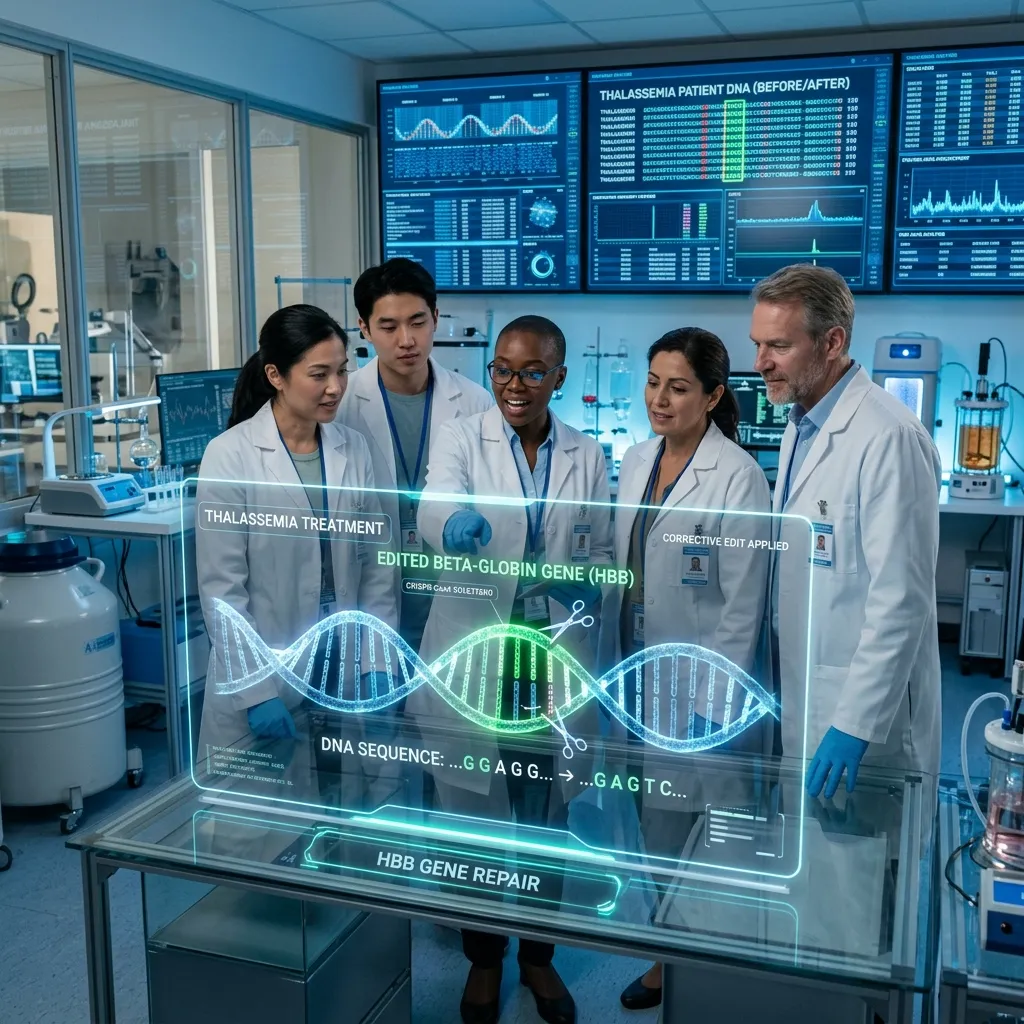 The pace of innovation shows no sign of slowing. Researchers are moving beyond standard CRISPR toward base editing and prime editing, which can change individual DNA letters without breaking the DNA strand. These tools promise to make stem cell gene therapy for blood disorders even safer.
How will accessibility improve?
Cost remains the biggest barrier. Treatments like Zynteglo and Casgevy carry list prices of approximately $2.8 million per patient. Healthcare systems are now exploring outcomes-based payment models, where payment depends on long-term success. Organizations like the Thalassemia International Federation advocate for broader insurance coverage and fund ongoing research.
Global collaboration matters too. Because thalassemia affects more than 300 million people worldwide—many in low- and middle-income countries—expanding access is as important as advancing the science. You can explore what’s coming next in our guide to future treatments for blood disorders.
Conclusion
Gene therapy for thalassemia marks a genuine turning point in medicine. The shift from lifelong symptom management to a single, curative intervention changes the entire trajectory of a patient’s life. Yes, high costs and conditioning risks demand careful thought. But for many patients, a transfusion-free future is no longer a distant dream—it is a real, achievable goal.
If you or a loved one is living with thalassemia, talk with a hematologist about whether gene therapy might be an option. Stay informed, ask questions, and lean on patient advocacy organizations for support. The science is advancing quickly, and the future looks brighter than ever.
Frequently Asked Questions
1. What is gene therapy for thalassemia?
Gene therapy for thalassemia is a treatment that extracts a patient’s own stem cells, corrects the genetic defect causing the disease, and reinfuses the cells to restore healthy hemoglobin production.
2. Is gene therapy a cure for thalassemia?
Gene therapy acts as a functional cure for many patients. Those who respond well often achieve lifelong transfusion independence, though doctors continue long-term monitoring.
3. How much does gene therapy for thalassemia cost?
Approved therapies like Zynteglo and Casgevy cost approximately $2.8 million per patient, making affordability the largest barrier to access today.
4. What is CRISPR gene therapy for thalassemia treatment?
CRISPR gene therapy for thalassemia treatment uses molecular scissors to disable the BCL11A gene, which reactivates fetal hemoglobin production to compensate for defective adult hemoglobin.
5. Who qualifies for gene therapy?
Current approvals cover patients aged 12 and older with transfusion-dependent beta thalassemia who lack a matched bone marrow donor and can tolerate conditioning chemotherapy.
6. What are the risks of gene therapy?
Risks include chemotherapy side effects, infection, infertility, possible off-target gene edits, and a small chance of insertional mutagenesis. Long-term monitoring is required.
7. How long do the effects last?
Current data suggest the effects are likely permanent because the therapy modifies self-renewing stem cells that continue producing healthy hemoglobin indefinitely.
8. How does stem cell gene therapy for blood disorders work?
Stem cell gene therapy for blood disorders harvests the patient’s own blood-forming stem cells, edits their genetic code in a lab, and returns them to the bone marrow to produce healthy blood cells.
9. Is gene therapy available for alpha thalassemia?
Most approved therapies focus on beta thalassemia. Research into alpha thalassemia is ongoing but more complex due to its multi-gene structure.
10. Where can I learn more about gene therapy for thalassemia?
Consult your hematologist, explore resources from the Thalassemia International Federation, or review FDA publications on approved therapies like Zynteglo and Casgevy.