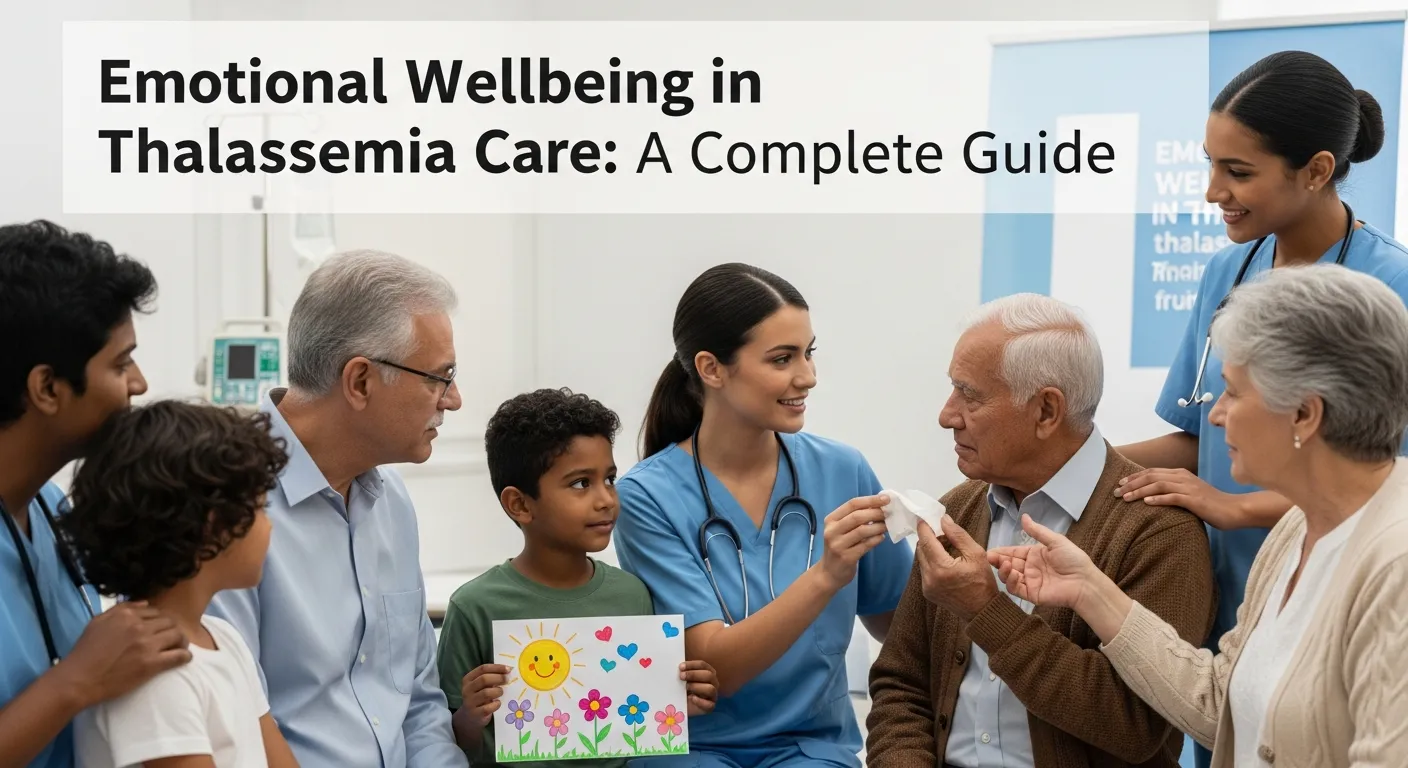
Emotional wellbeing in thalassemia care is a critical but often overlooked component of treatment. Patients face anxiety, depression, social isolation, and grief alongside their physical symptoms. Addressing mental health through therapy, strong support systems, and integrated care significantly improves quality of life and treatment outcomes.
Thalassemia is a lifelong inherited blood disorder that affects millions of people worldwide. Most conversations focus on hemoglobin levels, transfusion schedules, and iron overload management. These are essential. But behind every lab result sits a person managing fear, grief, exhaustion, and uncertainty—day after day, year after year.
Emotional wellbeing in thalassemia care rarely receives the same urgency as physical treatment. That gap matters. Research consistently shows that unmanaged psychological stress worsens physical symptoms, reduces treatment adherence, and lowers overall quality of life. The mind and body are not separate systems. When one suffers, the other follows.
This guide explores the full emotional landscape of thalassemia—the psychological challenges patients and families face, the strategies that genuinely help, and the critical role healthcare providers play in delivering holistic, compassionate care. By the end, you will have a clear, practical understanding of how to make emotional wellbeing a central pillar of thalassemia management, not an afterthought.
What Is the Emotional Burden of Living With Thalassemia?
 Thalassemia is not a condition you manage for a few months and move on from. It is lifelong. That reality shapes every aspect of a patient’s emotional experience from childhood through adulthood.
How Does a Chronic Condition Affect Mental Health Over Time?
The physical demands of thalassemia are relentless. Regular blood transfusions, iron chelation therapy, frequent hospital visits, and ongoing medication routines consume enormous time and energy. Each appointment is a reminder that the condition is permanent. Each transfusion carries its own anxiety. Over months and years, this accumulates into a chronic emotional burden that many patients carry quietly.
Children diagnosed at a young age often grow up feeling different from their peers. They miss school for medical appointments, sit out of sports, and navigate questions they may not know how to answer. Adolescents face identity challenges—trying to build independence and confidence while depending on medical systems for survival. Adults worry about careers, relationships, starting families, and long-term health trajectories.
At every stage, the psychological impact of thalassemia extends far beyond the clinical. It touches self-esteem, social development, educational achievement, and personal identity.
What Psychological Challenges Do Thalassemia Patients Commonly Face?
Several emotional challenges appear consistently across patients:
- Anxiety: Fear of complications, upcoming procedures, test results, and disease progression creates persistent low-grade stress. Some patients develop health-related anxiety that interferes with daily functioning.
- Depression: Studies on chronic blood disorders like thalassemia report depressive symptoms in roughly 30% or more of patients. Persistent sadness, hopelessness, loss of motivation, and emotional exhaustion are common.
- Grief: Patients often grieve the childhood they expected, the independence they lost, and the future plans that require adjustment. This grief is real and valid—even when no death has occurred.
- Body image concerns: Physical changes linked to thalassemia or its treatments, including delayed growth and visible side effects, can significantly affect self-esteem, particularly during adolescence.
- Social isolation: Fatigue, frequent absences, and limited awareness among peers pull patients away from social connections. Many describe feeling misunderstood or invisible in their suffering.
These challenges do not resolve on their own. Without targeted emotional support, they deepen. Recognizing them early is the first step toward effective intervention. For a deeper look at how depression specifically develops in blood disorder patients, the guide on depression in blood disorder patients outlines the causes, warning signs, and evidence-based management strategies in detail.
How Does Thalassemia Affect Families and Caregivers?
Emotional wellbeing in thalassemia care is not only a patient concern. Families carry a heavy share of the burden.
Parents of children with thalassemia often experience guilt related to the genetic nature of the disorder. They manage complex care routines, coordinate medical appointments, advocate within healthcare systems, and provide constant emotional reassurance—often while managing their own fear and exhaustion. Caregiver burnout is common and frequently goes unaddressed.
Financial strain amplifies the emotional toll. Long-term treatment costs, medication expenses, and time away from work create ongoing pressure that feeds anxiety and relationship stress throughout the household.
Siblings may feel overlooked as attention naturally concentrates on the child with thalassemia. Partners of adult patients navigate their own uncertainty about the future. The emotional ripple effect of a chronic diagnosis extends through every relationship in a patient’s life.
Open communication is the most effective tool available to families. Honest conversations about fears, needs, and boundaries prevent resentment from building and strengthen the support network that patients depend on most.
What Are the Most Effective Strategies for Emotional Wellbeing in Thalassemia Care?
 Managing emotional wellbeing requires a layered approach. No single strategy works for everyone, but several evidence-based methods make a consistent difference.
How Does Building a Strong Support Network Help?
Connection reduces isolation. Patients who maintain strong relationships with family, friends, and peers demonstrate better emotional resilience and improved treatment adherence. Support does not have to be elaborate—a trusted person who listens without judgment can make an enormous difference.
Peer mentorship programs connect patients with others who have navigated similar challenges. This kind of support carries a credibility that clinical care sometimes cannot match. Hearing from someone who manages the same condition daily—and still builds a meaningful life—offers genuine hope.
Support organizations such as the Thalassemia International Federation provide community resources, educational materials, and connection to global networks of patients and families. These platforms reduce isolation and empower patients to advocate for their own wellbeing.
What Role Does Professional Mental Health Support Play?
Therapy and counseling are not optional extras in thalassemia care—they are essential components of comprehensive treatment. Psychologists, social workers, and counselors trained in chronic illness provide structured support that general medical care cannot.
Cognitive Behavioral Therapy (CBT) is particularly effective for managing anxiety and depression in chronic illness settings. CBT helps patients identify negative thought patterns, challenge catastrophic thinking, and build practical coping skills. Research consistently supports its effectiveness for patients managing long-term health conditions.
When symptoms are severe or persistent, psychiatric evaluation and medication may be appropriate. Antidepressants and anti-anxiety medications can restore emotional stability and make other therapeutic interventions more effective. Any pharmacological approach should be coordinated with the hematologist to avoid interactions with existing treatments.
For a structured framework on mental health support for patients with chronic conditions, the complete care guide outlines the key pillars of effective psychological support, from screening and therapy to family involvement and accessible referrals.
Which Coping Mechanisms Support Emotional Resilience?
Practical, daily coping strategies build resilience over time:
- Mindfulness and meditation: Focused attention on the present moment reduces anxiety about future complications. Even five minutes of daily practice lowers cortisol and improves emotional regulation.
- Creative outlets: Art, music, writing, and other creative activities give patients a way to process emotions that are difficult to articulate. These outlets reduce internal pressure and support psychological processing.
- Physical activity: Gentle, doctor-approved movement releases endorphins and improves mood. Exercise should be adapted to each patient’s energy levels and physical limitations.
- Goal setting: Defining meaningful goals beyond the illness—educational, creative, relational—builds identity and purpose. Patients who maintain aspirations outside their diagnosis consistently report higher emotional wellbeing.
How Can Patients Be Empowered Through Education and Advocacy?
Knowledge reduces fear. Patients who understand their condition, treatment options, and the reasons behind clinical decisions feel more in control of their healthcare experience. That sense of agency directly supports emotional wellbeing.
Empowered patients ask questions, report symptoms accurately, and advocate for their own needs within healthcare settings. They become active participants in their care rather than passive recipients of treatment. This shift from passivity to engagement has measurable effects on both emotional wellbeing and clinical outcomes.
What Is the Healthcare Provider’s Role in Emotional Wellbeing?
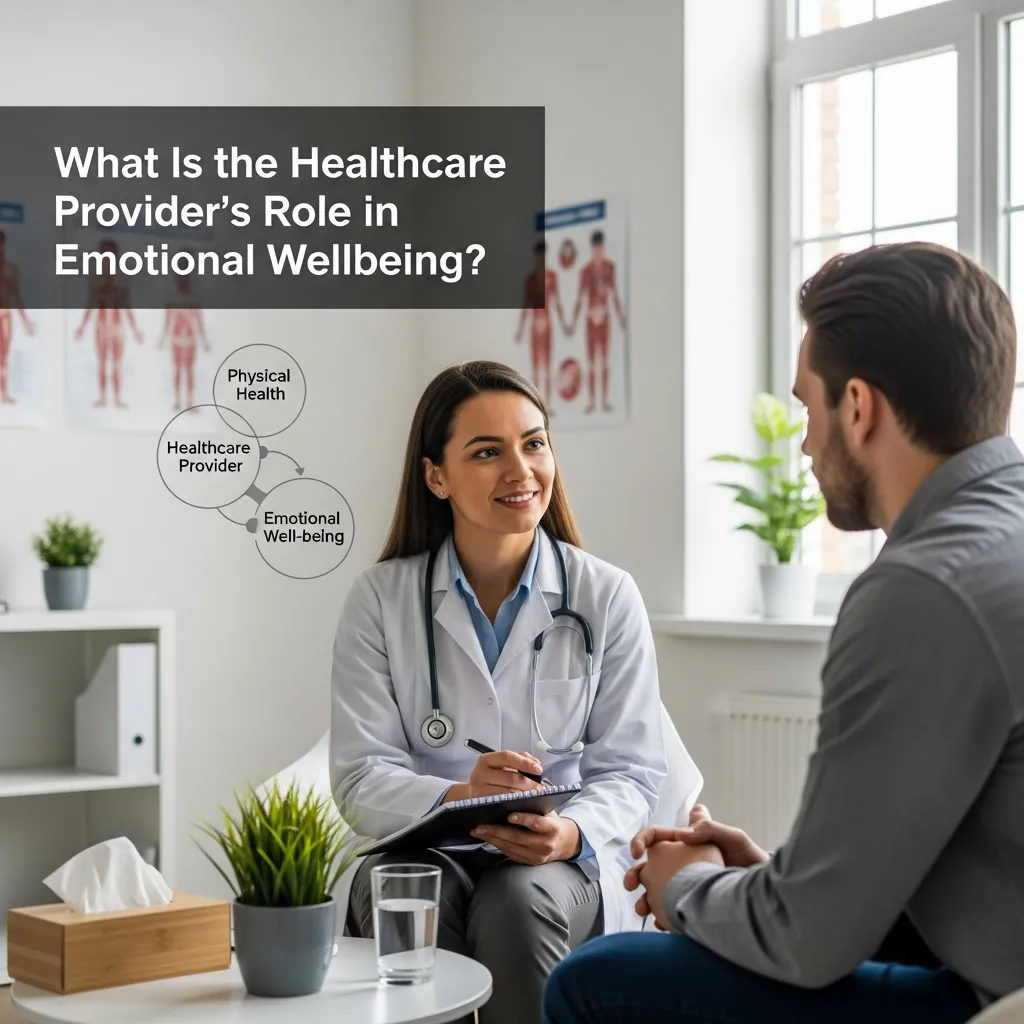 Treating the whole person—not just the disease—requires a deliberate shift in how thalassemia care is structured and delivered.
How Should Mental Health Be Integrated Into Routine Thalassemia Care?
Mental health screenings should be a standard part of every thalassemia clinic visit, not an optional add-on reserved for patients who request it. Simple validated tools can identify anxiety and depression early, before they deepen into more serious conditions.
Healthcare professionals benefit from specific training in psychosocial support. A hematologist who can recognize the signs of emotional distress and respond with empathy—rather than deflecting to physical symptoms—creates a clinical environment where patients feel safe disclosing their struggles.
Addressing the full scope of emotional wellbeing in thalassemia care also means understanding the strategies for coping with chronic illness stress that patients can apply between appointments. When providers are familiar with these approaches, they can recommend them specifically and reinforce their use during clinical interactions.
What Does Effective Communication Look Like in Thalassemia Care?
Active listening is a clinical skill. Providers who make eye contact, acknowledge emotional responses, and invite patients to share concerns create conversations that go beyond test results. Patients who feel heard are more likely to report psychological symptoms honestly and follow through with mental health referrals.
Clear, honest information reduces anxiety. When patients understand what a result means, why a treatment is being adjusted, and what to expect from upcoming procedures, the unknown becomes less threatening. Uncertainty is one of the strongest drivers of anxiety in chronic illness—transparency directly addresses it.
Why Are Collaborative Care Models Essential?
Thalassemia is complex. No single specialist can address its full scope. Collaborative care models bring hematologists, nurses, social workers, psychologists, and mental health professionals together under a coordinated treatment plan. Each team member contributes expertise that the others cannot provide alone.
This team-based approach ensures that emotional wellbeing receives dedicated attention alongside physical management. Social workers connect patients with community resources. Psychologists deliver structured therapy. Nurses provide continuity and catch early signs of distress between physician appointments. Together, they create a safety net that supports the whole person.
How Are Specific Emotional Challenges Addressed in Thalassemia Care?

What Helps Patients Manage Thalassemia-Related Anxiety?
Anxiety in thalassemia often has identifiable triggers: upcoming procedures, test results, disease progression, and financial stress. Identifying these triggers is the starting point for effective management.
Relaxation techniques—including deep breathing, progressive muscle relaxation, and guided imagery—offer immediate relief during acute anxiety. Regular mindfulness practice addresses the underlying pattern of anticipatory worry. For persistent anxiety, CBT provides structured tools that help patients challenge and reframe anxious thoughts.
Consistent medical monitoring also reduces anxiety by replacing uncertainty with information. Patients who follow regular monitoring schedules and understand their results report lower baseline anxiety because they are not waiting for surprises.
How Can Depression Be Recognized and Treated Effectively?
Depression can be difficult to identify in thalassemia patients because symptoms like fatigue and low energy overlap with the physical condition itself. The key indicators are emotional and cognitive: persistent sadness, hopelessness, loss of interest in activities once enjoyed, and feelings of worthlessness lasting more than two weeks.
Early recognition requires both patient self-awareness and provider attentiveness. When depression is identified, professional support should be initiated promptly. Waiting for symptoms to resolve on their own typically allows them to deepen.
Treatment combines therapy, lifestyle adjustments, social support, and medication where appropriate. Recovery is possible—but it requires acknowledgment and action. Patients and providers who treat depression as an expected and manageable part of thalassemia care achieve significantly better outcomes than those who minimize or overlook it.
How Do Patients Navigate Social and Educational Challenges?
School-aged patients benefit from individualized education plans that accommodate medical appointments and fatigue. Teachers and school staff who understand thalassemia can create supportive environments that protect academic progress and social inclusion.
Adults navigating the workplace benefit from workplace accommodations, flexible scheduling, and open communication with employers about their condition. Many countries provide legal protections for employees managing chronic conditions—knowing these rights empowers patients to advocate effectively.
Socially, reducing stigma begins with education. When peers, teachers, and colleagues understand thalassemia, the isolation that patients experience decreases. Patient-led awareness efforts and community education programs play a meaningful role in this process. Resources from the World Health Organization (WHO) offer evidence-based guidance on supporting chronic illness patients in social and occupational settings.
Emotional Wellbeing Is Not a Luxury—It’s Core to Thalassemia Care
The physical demands of thalassemia are real and serious. So are the emotional ones. Separating these two dimensions of the patient experience produces incomplete care that leaves people without the support they need to thrive.
Emotional wellbeing in thalassemia care improves treatment adherence, strengthens resilience, reduces the severity of anxiety and depression, and raises overall quality of life. These are not soft outcomes. They are clinically significant results that affect how well patients manage their condition over decades.
The path forward requires action from every direction: patients who speak openly about their emotional struggles, families who create supportive environments, healthcare providers who integrate mental health into routine care, and healthcare systems that fund and prioritize psychosocial support alongside medical treatment.
Every patient with thalassemia deserves care that addresses the full weight of their experience—not just the numbers on a blood test. Emotional wellbeing belongs at the center of that care.
Frequently Asked Questions
1. What does emotional wellbeing in thalassemia care mean?
Emotional wellbeing in thalassemia care refers to the psychological and social health of patients managing a lifelong blood disorder. It includes anxiety, depression, grief, body image concerns, social relationships, and the mental health support systems that help individuals cope and thrive alongside medical treatment.
2. How common is depression in thalassemia patients?
Depression affects a significant proportion of thalassemia patients. Research suggests that depressive symptoms are common due to chronic treatment demands and social challenges. Addressing emotional wellbeing in thalassemia care can help identify depression early and improve quality of life.
3. What are the main emotional challenges faced by thalassemia patients?
Common challenges include anxiety about disease progression, depression, grief over lifestyle limitations, body image concerns, and social isolation. Prioritizing emotional wellbeing in thalassemia care ensures these psychological difficulties receive the same attention as physical symptoms.
4. How does coping with thalassemia affect family members?
Families often experience caregiver fatigue, financial stress, and anxiety about the patient’s future. Supporting emotional wellbeing in thalassemia care should include caregivers and family members, as their mental health directly influences patient outcomes.
5. What therapies are most effective for mental health and thalassemia?
Cognitive Behavioral Therapy (CBT), counseling, support groups, and mindfulness-based interventions are among the most effective approaches. These therapies play an important role in strengthening emotional wellbeing in thalassemia care and reducing psychological distress.
6. When should a thalassemia patient seek professional mental health support?
Patients should seek help when feelings of sadness, hopelessness, stress, or anxiety persist for more than two weeks or interfere with daily life. Early intervention is essential for maintaining emotional wellbeing in thalassemia care and preventing more serious mental health issues.
7. How can healthcare providers better support emotional wellbeing in thalassemia care?
Healthcare professionals can improve emotional wellbeing in thalassemia care by conducting routine mental health screenings, providing psychosocial support, encouraging open communication, and connecting patients with mental health specialists when needed.
8. Can mindfulness and other coping strategies really reduce thalassemia-related stress?
Yes. Mindfulness, deep breathing exercises, physical activity, journaling, and creative hobbies can help reduce stress and anxiety. These practices contribute significantly to emotional wellbeing in thalassemia care when used alongside appropriate medical and psychological support.
9. How does social isolation affect thalassemia patients, and what helps?
Social isolation can worsen anxiety, depression, and treatment-related stress. Peer support groups, community programs, and patient advocacy networks can improve emotional wellbeing in thalassemia care by fostering connection and reducing feelings of loneliness.
10. Does addressing emotional wellbeing improve physical health outcomes in thalassemia?
Yes. Research shows that improving emotional wellbeing in thalassemia care can enhance treatment adherence, reduce stress-related complications, and support better overall disease management. Emotional and physical health are closely interconnected in thalassemia care.