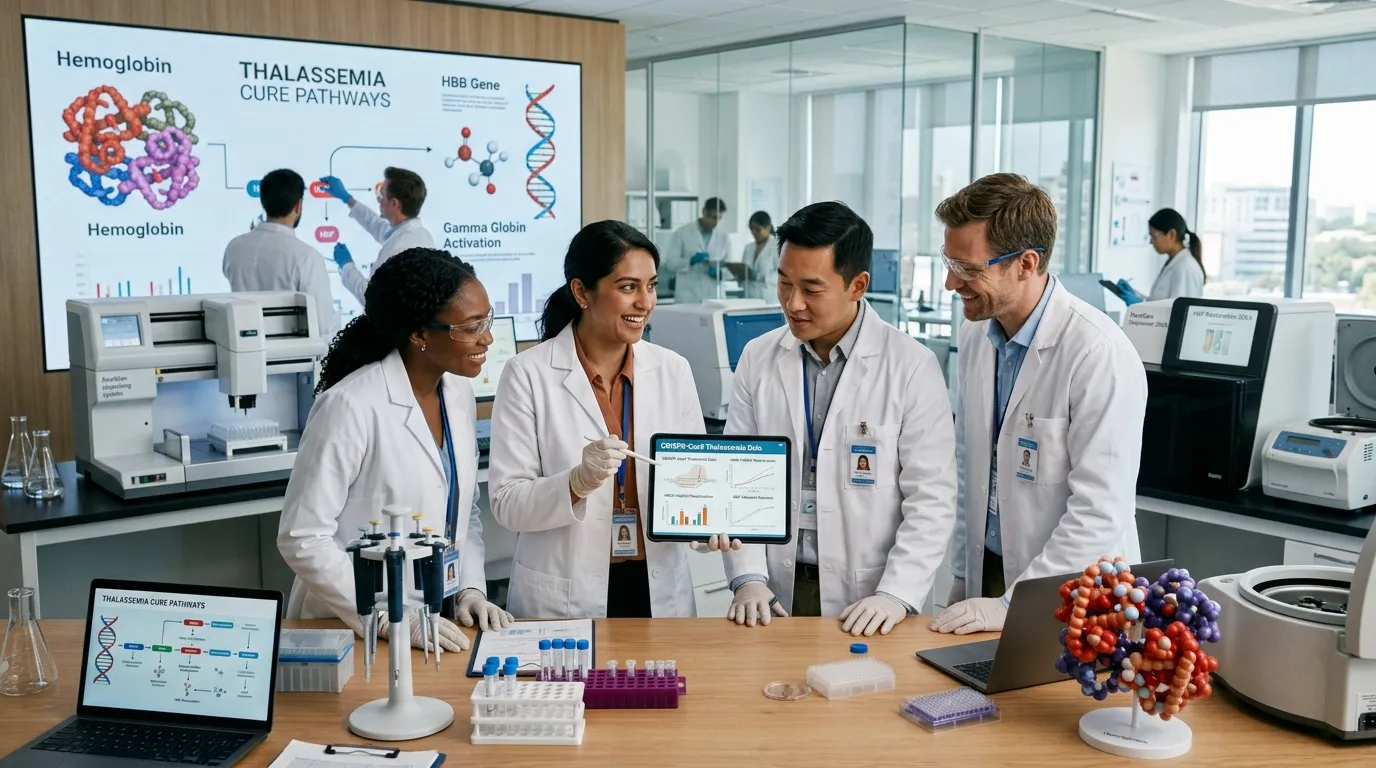
Discover the latest emerging treatments for thalassemia, including gene therapy, stem cell transplantation, and innovative therapies. Learn how these advances are improving outcomes, reducing transfusion dependence, and offering new hope for people living with thalassemia.
Emerging treatments for thalassemia include CRISPR gene editing, lentiviral gene therapy, advanced stem cell transplants, and novel drugs like luspatercept. FDA-approved therapies such as Casgevy and Zynteglo now offer many patients a functional cure, freeing them from lifelong blood transfusions.
For decades, severe thalassemia followed a fixed and exhausting routine: blood transfusions every few weeks, daily iron chelation, and a life organized around hospital visits. These treatments kept people alive, but they never touched the genetic error at the heart of the disease. That reality is changing fast.
Today, emerging treatments for thalassemia are rewriting what patients can expect. Gene therapy for thalassemia now targets the root cause directly, and curative treatments for thalassemia are no longer confined to research papers. Two gene therapies have already won FDA approval, and the science keeps moving forward.
This guide explains the breakthroughs reshaping thalassemia care—from CRISPR and stem cell editing to new drug therapies and personalized medicine. You will learn how each approach works, what the clinical evidence shows, and what the future of thalassemia treatment may hold for patients around the world.
What Is Thalassemia and Why Do New Treatments Matter?
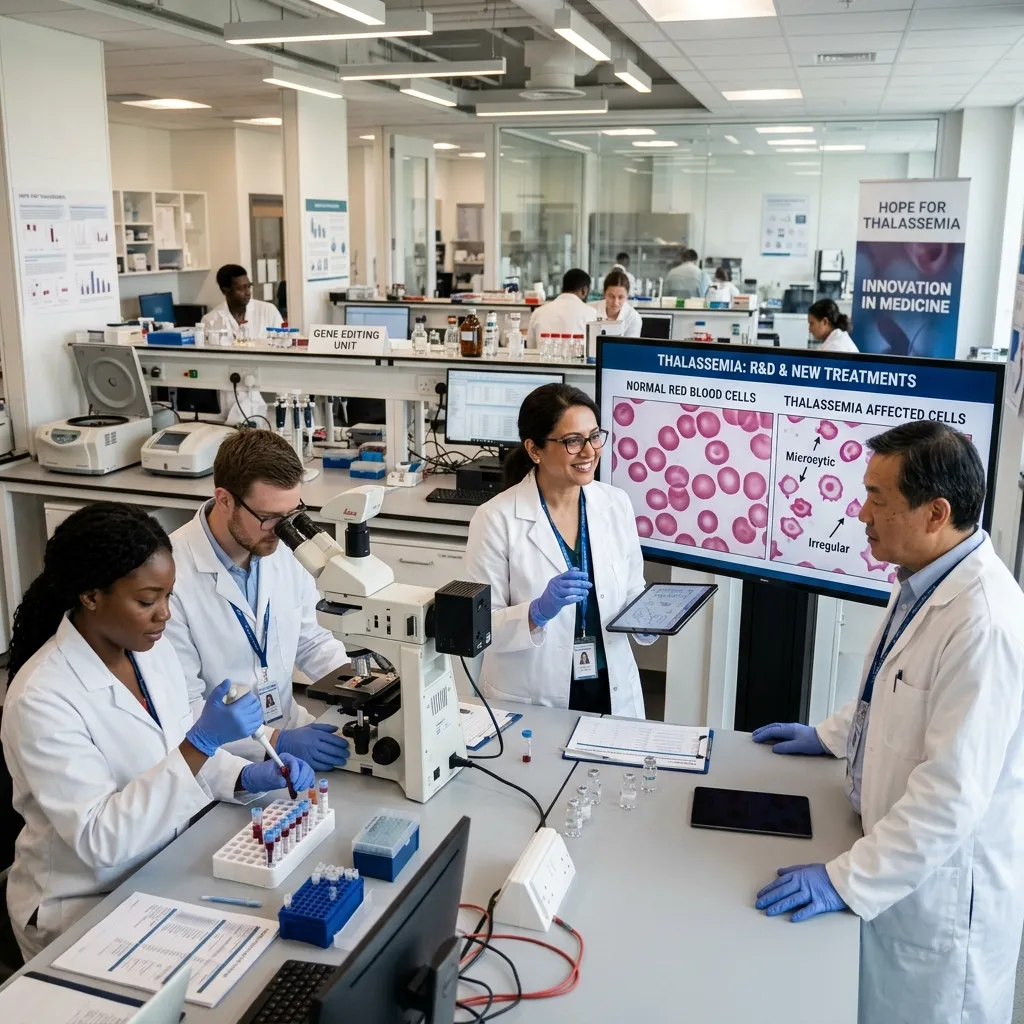 Thalassemia is an inherited blood disorder caused by mutations in the genes that control hemoglobin production. Hemoglobin is the protein in red blood cells that carries oxygen throughout the body. When these genes malfunction, the body cannot make enough healthy hemoglobin, leading to chronic anemia.
Beta thalassemia major is the most severe form, often requiring blood transfusions every two to four weeks for survival. Alpha thalassemia, by contrast, affects the alpha-globin chains and ranges from a silent carrier state to fatal conditions in the most severe cases. Thalassemia affects more than 300 million people globally, with the heaviest burden in South Asia, the Mediterranean, the Middle East, and Africa.
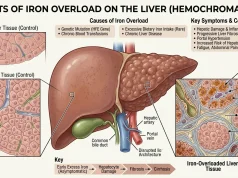
The standard treatment carries a heavy cost. Each transfusion floods the body with iron, so patients must take iron chelation therapy to prevent fatal organ damage. Bone marrow transplants can cure the disease, but they require a perfectly matched donor that many patients never find. This is exactly why emerging treatments for thalassemia matter so much—they aim to correct the disease at its source rather than manage its symptoms forever.
How Does Gene Therapy for Thalassemia Work?
Gene therapy for thalassemia corrects the genetic defect behind the disease by modifying a patient’s own hematopoietic stem cells. Doctors collect these blood-forming cells, edit or repair them in a specialized laboratory, then reinfuse them. Once the corrected cells engraft in the bone marrow, they begin producing healthy hemoglobin.
Because the therapy uses the patient’s own cells, it removes the need for a matched donor and eliminates the risk of graft-versus-host disease. That single advantage makes gene therapy one of the most promising curative treatments for thalassemia available today.
What are the two main approaches to gene therapy?
Scientists use two primary methods to repair the faulty genetic code:
- Lentiviral gene addition: A harmless, engineered virus delivers a working copy of the beta-globin gene into the stem cell’s DNA. This is the foundation of Zynteglo (betibeglogene autotemcel), approved by the FDA in August 2022.
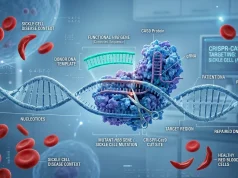
- CRISPR-Cas9 gene editing: Rather than adding a new gene, CRISPR edits the existing genetic code with remarkable precision. It works like molecular scissors, modifying DNA without using a viral carrier.
Both methods share the same goal: restoring healthy red blood cell production and reducing or eliminating the need for transfusions. Our complete guide to gene therapy for thalassemia covers these approaches in greater depth.
What does the clinical evidence show?
The results are striking. The CLIMB THAL-111 trial reported that 39 out of 42 evaluable patients receiving Casgevy remained transfusion-free for at least 12 consecutive months. For Zynteglo, the HGB-207 and HGB-212 clinical trials showed that 89% of eligible patients achieved transfusion independence.
For people who once needed transfusions every few weeks, these numbers represent a complete change in daily life. They also signal that the future of thalassemia treatment is shifting from symptom control to lasting correction.
How Does CRISPR Gene Editing Treat Thalassemia?
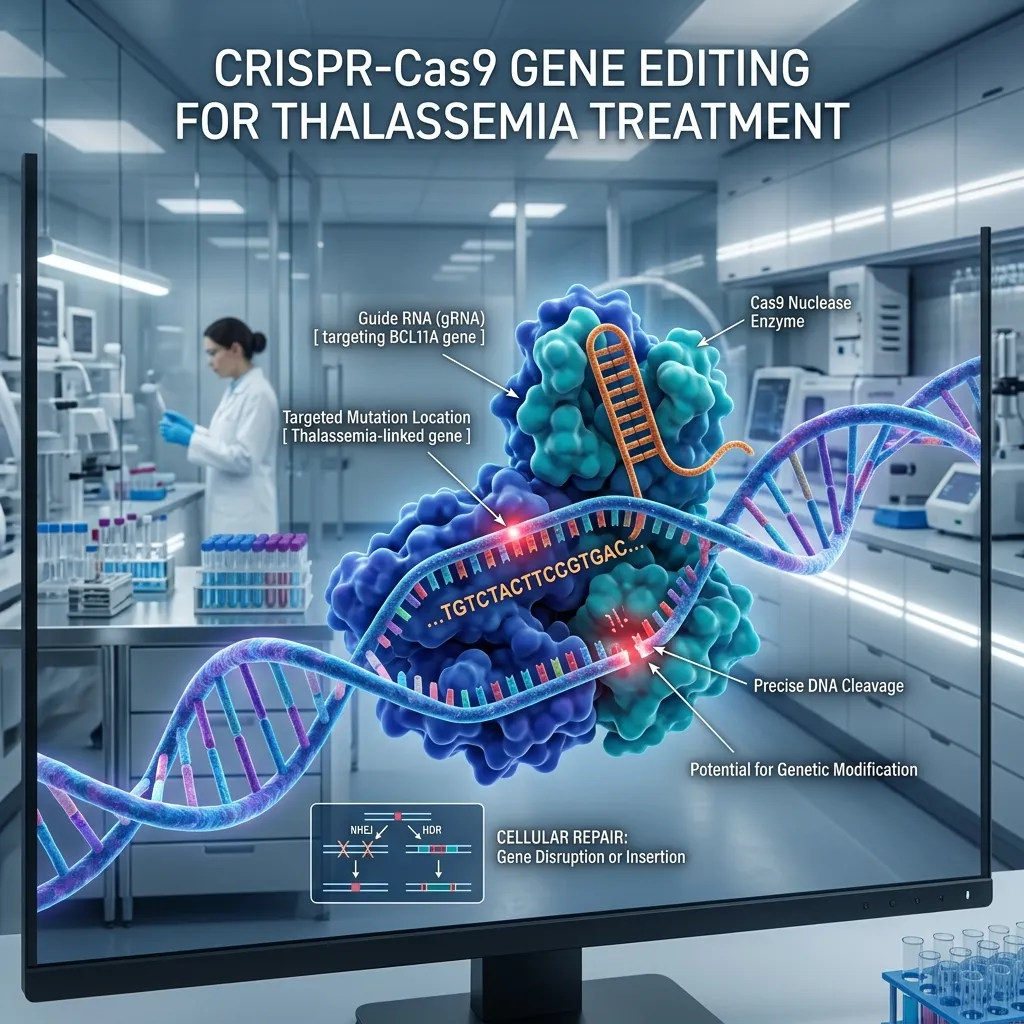 CRISPR-Cas9 represents one of the most precise tools in modern medicine. The system has two main parts: a guide RNA that acts like an address, directing the tool to an exact spot in the genome, and the Cas9 enzyme, which makes a targeted cut. The cell’s natural repair machinery then completes the change.
For thalassemia, CRISPR uses a clever strategy. Instead of repairing the faulty adult hemoglobin gene directly, it edits a gene called BCL11A. This gene normally switches off fetal hemoglobin production shortly after birth. By disabling BCL11A, the therapy reactivates fetal hemoglobin—and that healthy fetal hemoglobin compensates beautifully for the defective adult version.
Casgevy (exagamglogene autotemcel), approved by the FDA in December 2023, became the first CRISPR-based therapy approved for any disease. For a deeper look at how this technology works across inherited conditions, see our guide on CRISPR gene editing for blood disorders.
The main technical challenge is “off-target” editing, where the molecular scissors cut the wrong DNA sequence. To reduce this risk, scientists are developing next-generation tools like base editing and prime editing, which change single DNA letters without cutting both strands.
What Are the Curative Treatments for Thalassemia?
Until recently, only one curative option existed for thalassemia. Now patients have more paths toward a potential cure, each with its own strengths and trade-offs.
How does stem cell transplantation cure thalassemia?
A bone marrow transplant, also called a hematopoietic stem cell transplant, replaces a patient’s faulty blood-forming cells with healthy ones from a donor. For many patients with severe thalassemia, a well-matched allogeneic transplant offers a genuine cure.
The biggest limitation is donor matching. Doctors use human leukocyte antigen (HLA) matching to find a suitable donor. Siblings offer the best chance, with roughly a 25% probability per sibling. When no family match exists, doctors search donor registries and cord blood banks. Advances in HLA matching and reduced-intensity conditioning have made the procedure safer and more accessible than it was a decade ago. Our stem cell transplant patient guide walks through each stage of the process.
How does gene therapy achieve a functional cure?
Gene therapy offers a curative path without a donor. Because it edits self-renewing stem cells, the correction lasts. These cells keep dividing and producing healthy blood throughout a patient’s life. For many people, that means freedom from transfusions, daily medication, and constant hospital visits—a true functional cure.
What does the future hold for combination therapies?
Researchers are exploring how to combine these approaches and improve them further. Induced pluripotent stem cells (iPSCs) could one day supply an unlimited source of corrected cells without any donor at all. As these strategies mature, the line between “treatment” and “cure” continues to blur.
What Novel Drug Therapies and Supportive Care Advancements Are Available?
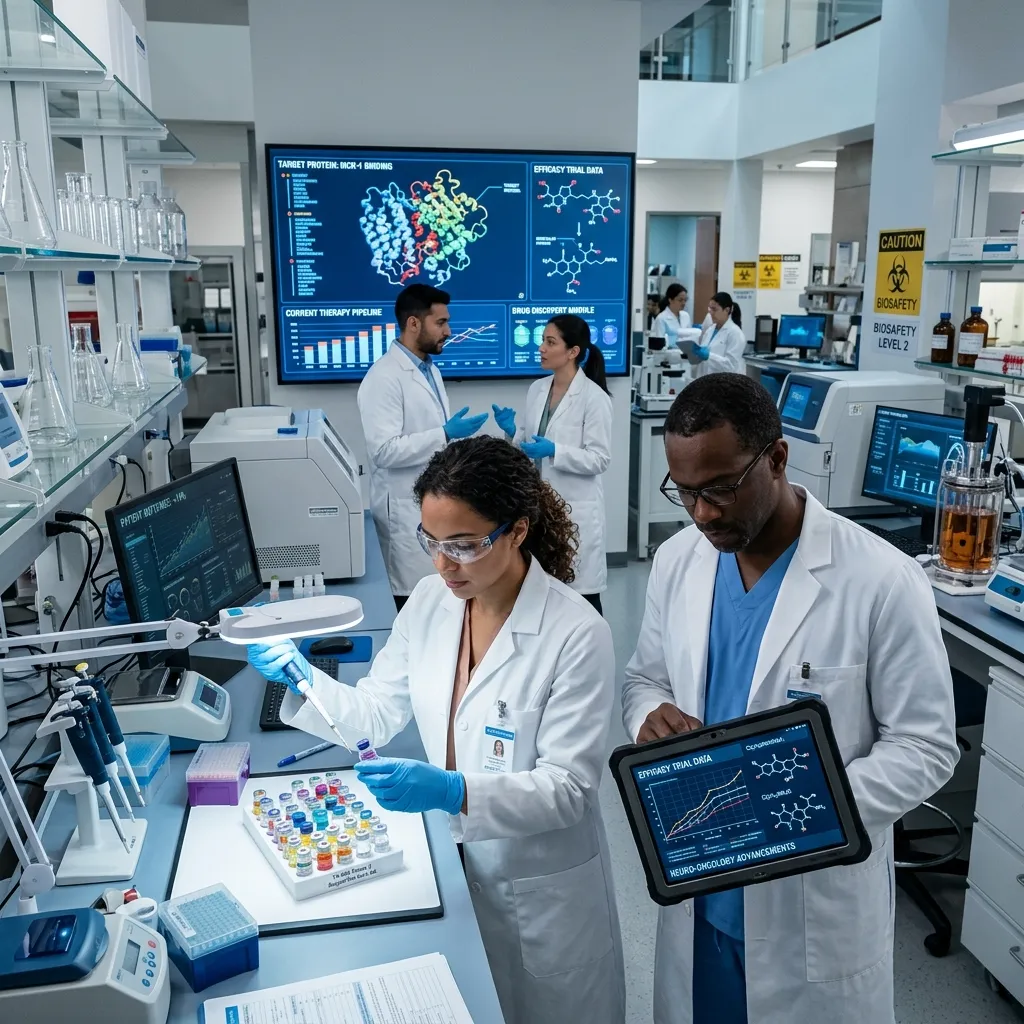 Not every patient is a candidate for gene therapy or transplantation. For them, new drug therapies and improved supportive care are transforming day-to-day management.
What is luspatercept and how does it work?
Luspatercept is a first-in-class therapy that helps red blood cells mature properly. In patients with beta thalassemia, defective red blood cells often die before they finish developing. Luspatercept supports the late stages of red blood cell production, which can raise hemoglobin levels and reduce transfusion needs. For transfusion-dependent patients who are not eligible for curative options, this drug offers a meaningful improvement in quality of life.
How has iron chelation therapy improved?
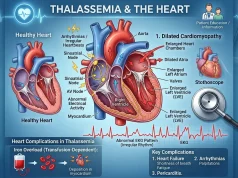
Iron overload remains one of the most dangerous complications of frequent transfusions. Modern oral iron chelators are easier to take than older infused versions, improving adherence and protecting the heart, liver, and endocrine system from iron-related damage. Better monitoring tools also help doctors track iron levels more precisely and adjust treatment in real time.
How does personalized medicine fit in?
Personalized medicine tailors treatment to each patient’s genetics, disease severity, and overall health. By understanding the exact mutations involved and how a patient responds to therapy, doctors can design care plans that maximize benefit and minimize risk. This individualized approach is becoming a defining feature of advanced thalassemia care.
What Does the Future of Thalassemia Treatment Look Like?
The pace of innovation shows no sign of slowing. Several forces are shaping the future of thalassemia treatment.
AI and big data in research: Artificial intelligence is helping researchers analyze vast genetic datasets, identify promising drug targets, and design safer gene-editing tools. This accelerates discovery and shortens the path from laboratory to clinic.
Global access to advanced therapies: Cost remains the largest barrier. Approved therapies like Casgevy and Zynteglo carry list prices of roughly $2.8 million per patient. Because thalassemia affects so many people in low- and middle-income countries, expanding access matters as much as advancing the science. Healthcare systems are now exploring outcomes-based payment models, where payment depends on long-term success.
Ethical considerations: Current therapies edit only somatic (body) cells, so the changes are not passed to future children. Germline editing, which would alter inheritable DNA, remains strictly prohibited in human clinical use. This boundary sits at the heart of the ongoing ethical debate.
Patient advocacy and support: Organizations dedicated to thalassemia care continue to fund research, push for broader insurance coverage, and support patients and families through every stage of treatment.
For a wider view of what’s coming, our overview of future treatments for blood disorders explores the next wave of innovation. Trusted external resources like the National Human Genome Research Institute and the Thalassemia International Federation also offer reliable information for patients and families.
A Brighter Future for Thalassemia Patients
 The emerging treatments for thalassemia mark a genuine turning point in medicine. CRISPR gene editing and lentiviral gene therapy now offer functional cures. Advanced stem cell transplants give more patients a path to recovery. New drugs like luspatercept and improved supportive care raise the quality of life for those who cannot pursue curative options.
Challenges remain—high costs, conditioning risks, and questions of global access all demand careful attention. But the trajectory is unmistakable. As the technology matures and prices fall, these therapies will reach more patients than ever before.
If you or a loved one is living with thalassemia, talk with a hematologist about which options might be right for you. Stay informed, ask questions, and lean on patient advocacy organizations for support. The science is advancing quickly, and the future of thalassemia treatment looks brighter than ever.
Conclusion
The future of thalassemia care is changing rapidly. Emerging treatments for thalassemia, including gene therapy, CRISPR gene editing, improved stem cell transplantation, and innovative medications, are transforming how the disease is managed. While these therapies may not yet be available or suitable for everyone, they offer new hope for reducing transfusion dependence and improving long-term health. As research continues to advance, patients can expect safer, more effective, and increasingly personalized treatment options. Staying informed and working closely with a hematology specialist can help individuals access the most appropriate therapies and benefit from the latest breakthroughs in thalassemia care.
Frequently Asked Questions
1. What is thalassemia?
Thalassemia is an inherited blood disorder caused by mutations in the genes that control hemoglobin production. When these genes malfunction, the body cannot make enough healthy hemoglobin, leading to chronic anemia. Severe forms often require lifelong blood transfusions.
2. How does gene therapy for thalassemia work?
Gene therapy for thalassemia extracts a patient’s own hematopoietic stem cells, corrects the genetic defect in a lab using CRISPR or a viral vector, and reinfuses the cells. The corrected cells then produce healthy hemoglobin, often eliminating the need for transfusions.
3. Is gene therapy a permanent cure for thalassemia?
For many patients, yes. Because gene therapy modifies self-renewing stem cells, the corrected cells continue producing healthy blood for years. Doctors describe it as a functional cure, though long-term monitoring through 15-year follow-up studies remains standard.
4. What are the risks of these new treatments?
The main risks come from myeloablative chemotherapy used to clear the bone marrow before treatment. Side effects include fatigue, nausea, infection risk, and a substantial risk of infertility. There is also a small chance of off-target gene edits, which is why long-term follow-up is essential.
5. How can patients access these emerging therapies?
Approved therapies are available at specialized treatment centers. Eligibility typically covers patients aged 12 and older with severe, transfusion-dependent disease. Talk with a hematologist about referrals, clinical trial options, and insurance coverage.
6. What role does diet play in thalassemia management?
Diet supports overall health but cannot cure thalassemia. Many patients are advised to limit iron-rich foods and iron supplements, since transfusions already cause iron overload. A hematologist or dietitian can provide personalized guidance.
7. Are there treatments for all types of thalassemia?
Most approved gene therapies focus on beta thalassemia. Research into alpha thalassemia is ongoing but more complex due to its multi-gene structure. Stem cell transplants and supportive care can help patients across different forms of the disease.
8. What is the average cost of gene therapy for thalassemia?
Approved therapies such as Casgevy and Zynteglo cost approximately $2.8 million per patient. This high price remains the largest barrier to access worldwide, though outcomes-based payment models are being explored to improve affordability.
9. How can I participate in clinical trials?
Ask your hematologist about active thalassemia trials, and search registries that list ongoing studies. Eligibility depends on your specific diagnosis, age, and overall health. A specialist can help determine whether you qualify.
10. What support is available for thalassemia patients and families?
Patient advocacy organizations like the Thalassemia International Federation offer education, financial guidance, and emotional support. Counseling services and support groups also help patients and caregivers cope with the demands of living with a chronic blood disorder.